Managing Class Location Changes Without Losing Control
When a pipeline segment experiences a class location change, the challenge isn’t just regulatory—it’s operational.
Operators looking to execute the 49 CFR 192.611(a)(4) alternative can avoid full pipe replacement—but in exchange, they take on a 24-month execution window and a set of cross-functional requirements spanning integrity, compliance, GIS, and operations.
The real objective?
Keep scope, work, and evidence connected from day one through closeout—so nothing falls apart when it matters most.
Why This Matters
The biggest risk isn’t misunderstanding the regulation—it’s losing control of execution.
When scope, ownership, and evidence aren’t tightly connected, operational risk climbs quickly—especially across teams working in different systems with fragmented workflows.
Class location changes add pressure because operators must not only complete the work, but also prove it later with defensible, traceable evidence.
This rule changes the response model from automatic pipe replacement to integrity-driven decision-making—creating opportunities to reduce capital replacement costs when operators can demonstrate eligibility, integrity, and compliance with defensible data.
For many operators, the biggest constraint is no longer the rule itself—it’s connecting data across GIS, integrity, compliance, and operations systems quickly enough to support defensible execution.
Common friction points include:
Tight timelines tied to a 24-month clock
Increased expectations for TVC (traceable, verifiable, complete) data
Greater scrutiny on audit-ready documentation
Coordination challenges across disconnected teams and systems
Where Operators Typically Struggle
Most breakdowns don’t happen at the regulatory level—they happen in execution.
Specifically, in keeping data, documents, and decisions aligned over time.
Typical issues include:
Data spread across multiple systems
Difficulty linking documents to specific assets
Limited visibility into evidence and lineage
Time lost digging through PDFs and spreadsheets
Individually, these are manageable. Together, they create risk—especially under audit conditions.
How Operators Capture Value from 49 CFR 192.611(a)(4)
For many operators, the biggest advantage of 49 CFR 192.611(a)(4) is not just compliance—it’s avoiding unnecessary replacement projects through a more targeted, integrity-driven approach.
Instead of defaulting to costly pipe replacement, eligible segments can remain in service when operators can validate integrity, document compliance, and execute within the required 24-month window.
The rule also creates opportunities to reuse qualifying recent assessments, reducing redundant inspections, minimizing operational disruption, and accelerating execution timelines.
Operators with connected, defensible data are better positioned to reduce rework, avoid emergency remediation, improve planning across teams, and control overall program costs while maintaining audit readiness.
Operator Checklist: Are You Ready?
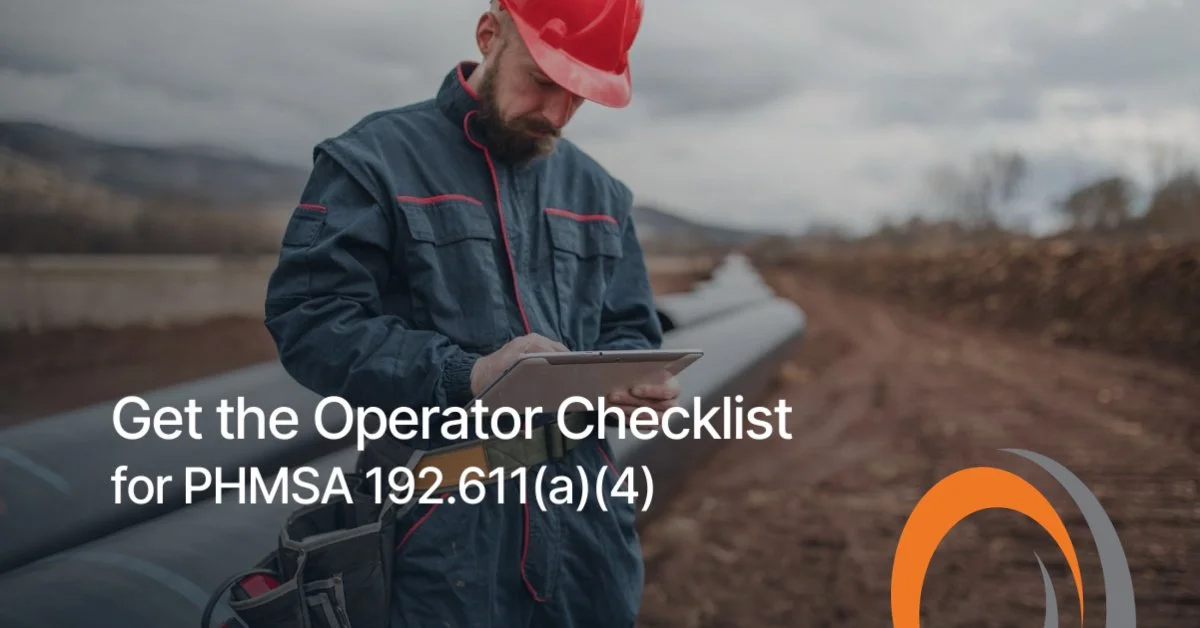
To help operators stay ahead of these challenges, Vintri has developed a practical Class Location Change Readiness Checklist.
Use it to validate your approach before and during execution:
Assign clear ownership for every requirement
Track due dates against the 24-month timeline
Ensure every step has a TVC evidence trail tied to systems of record
Confirm visibility across teams and stakeholders
Fill out the form below to download the checklist to assess your readiness and reduce execution risk.
Download the Class Location Change Readiness Checklist
Complete the form below to access the checklist and assess your organization’s readiness for 49 CFR 192.611(a)(4).
How Vintri Helps
Vintri helps operators keep requirements, assets, and evidence aligned—without replacing existing systems.
By connecting integrity data, source documentation, and execution evidence across systems, teams can make faster, defensible go/no-go decisions with greater confidence.
Vintri links regulatory requirements directly to supporting records, asset data, ownership, and decision history—improving visibility, reducing rework, and supporting audit-ready execution from start to finish.
With Vintri, operators can:
Link attributes directly to source documentation
Maintain clear evidence and provenance
Keep segment readiness visible across teams
Generate audit-ready reports quickly
Vintri integrates with systems like PODS/UPDM, ArcGIS, SAP, Maximo, and integrity tools, improving visibility, reducing rework, and supporting audit-ready reporting from start to finish.
Final Thought
As regulatory expectations continue to evolve, success depends on more than completing the work—it depends on being able to prove it, defend it, and sustain it over time.
The checklist we have provided is a starting point; the operators who get ahead will be the ones who turn it into a repeatable process.

Want a practical starting point? Book a 30-minute vintriCORE demo to see how you can track class location changes with traceable, auditable data ready for your systems of record.